Idioms commonly used in conversation are the small, quirky phrases that make everyday speech feel natural, rather than stiff or scripted. Unlike literal vocabulary, these expressions carry implied meaning that most native speakers pick up on without thinking, making them a key part of sounding like a local in casual and professional settings alike. Below, we break down common use cases, how to pick the right ones for your conversations, and what to avoid when dropping them into chat.
Relationship-Focused Idioms for Personal and Professional Chats

These phrases are built for talking about relationship dynamics, whether you’re recounting a past job, a friendship shift, or a networking interaction. They pack a lot of context into a short phrase without requiring you to overexplain. For example, if you left a role on good terms, you might say “I made sure to leave my old team a positive note, I didn’t want to burn bridges with the people I worked with for three years.” These work best when you’re sharing personal experiences or talking about connection management, but avoid overusing them in a single conversation to keep your speech from sounding forced.
Money Idioms for Low-Stakes Financial Conversations

Idioms about money are perfect for casual chats about budgeting, side hustles, or big purchases, no formal jargon required. If a friend asks how you can afford a new laptop, you might say “I saved up for months, I didn’t want to blow my whole paycheck on it.” When talking about a recent raise, “That promotion really puts more money in my pocket every month.” These phrases feel relaxed and approachable, but skip them for formal settings like performance reviews or client budget meetings, where straightforward language is more appropriate.
How to Pick Idioms That Fit Your Conversation
Not every idiom works for every situation, so use these quick guidelines to choose phrases that feel natural rather than out of place:
- Match your audience: Use casual, niche idioms with friends, family, or close teammates; stick to widely understood idioms for professional settings or chats with people you don’t know well.
- Prioritize clarity: Skip obscure phrases if you’re talking to a non-native English speaker, or if you’re unsure the other person will recognize the expression.
- Keep flow in mind: Don’t force an idiom into a sentence if it doesn’t fit the natural rhythm of the chat – a forced phrase will stand out more than a simple, literal statement.
Safe, Widely Understood Idioms for New Users
If you’re just starting to incorporate idioms commonly used in conversation into your speech, start with phrases that are recognized across most U.S. regions and cultural backgrounds. “Hit the nail on the head” works when you agree with someone’s exact point, “piece of cake” describes an easy task, and “under the weather” is a polite way to say you’re feeling sick. These are low-risk options that will make you sound more conversational without running the risk of confusing your conversation partner.
Idioms commonly used in conversation are the small, quirky phrases that make everyday speech feel natural, rather than stiff or scripted. Unlike literal vocabulary, these expressions carry implied meaning that most native speakers pick up on without thinking, making them a key part of sounding like a local in casual and professional settings alike. Below, we break down common use cases, how to pick the right ones for your conversations, and what to avoid when dropping them into chat.
Relationship-Focused Idioms for Personal and Professional Chats
These phrases are built for talking about relationship dynamics, whether you’re recounting a past job, a friendship shift, or a networking interaction. They pack a lot of context into a short phrase without requiring you to overexplain. For example, if you left a role on good terms, you might say “I made sure to leave my old team a positive note, I didn’t want to burn bridges with the people I worked with for three years.” These work best when you’re sharing personal experiences or talking about connection management, but avoid overusing them in a single conversation to keep your speech from sounding forced.
Money Idioms for Low-Stakes Financial Conversations
Idioms about money are perfect for casual chats about budgeting, side hustles, or big purchases, no formal jargon required. If a friend asks how you can afford a new laptop, you might say “I saved up for months, I didn’t want to blow my whole paycheck on it.” When talking about a recent raise, “That promotion really puts more money in my pocket every month.” These phrases feel relaxed and approachable, but skip them for formal settings like performance reviews or client budget meetings, where straightforward language is more appropriate.
How to Pick Idioms That Fit Your Conversation
Not every idiom works for every situation, so use these quick guidelines to choose phrases that feel natural rather than out of place:
- Match your audience: Use casual, niche idioms with friends, family, or close teammates; stick to widely understood idioms for professional settings or chats with people you don’t know well.
- Prioritize clarity: Skip obscure phrases if you’re talking to a non-native English speaker, or if you’re unsure the other person will recognize the expression.
- Keep flow in mind: Don’t force an idiom into a sentence if it doesn’t fit the natural rhythm of the chat – a forced phrase will stand out more than a simple, literal statement.
Safe, Widely Understood Idioms for New Users
If you’re just starting to incorporate idioms commonly used in conversation into your speech, start with phrases that are recognized across most U.S. regions and cultural backgrounds. “Hit the nail on the head” works when you agree with someone’s exact point, “piece of cake” describes an easy task, and “under the weather” is a polite way to say you’re feeling sick. These are low-risk options that will make you sound more conversational without running the risk of confusing your conversation partner.
Idioms - ESLBUZZ
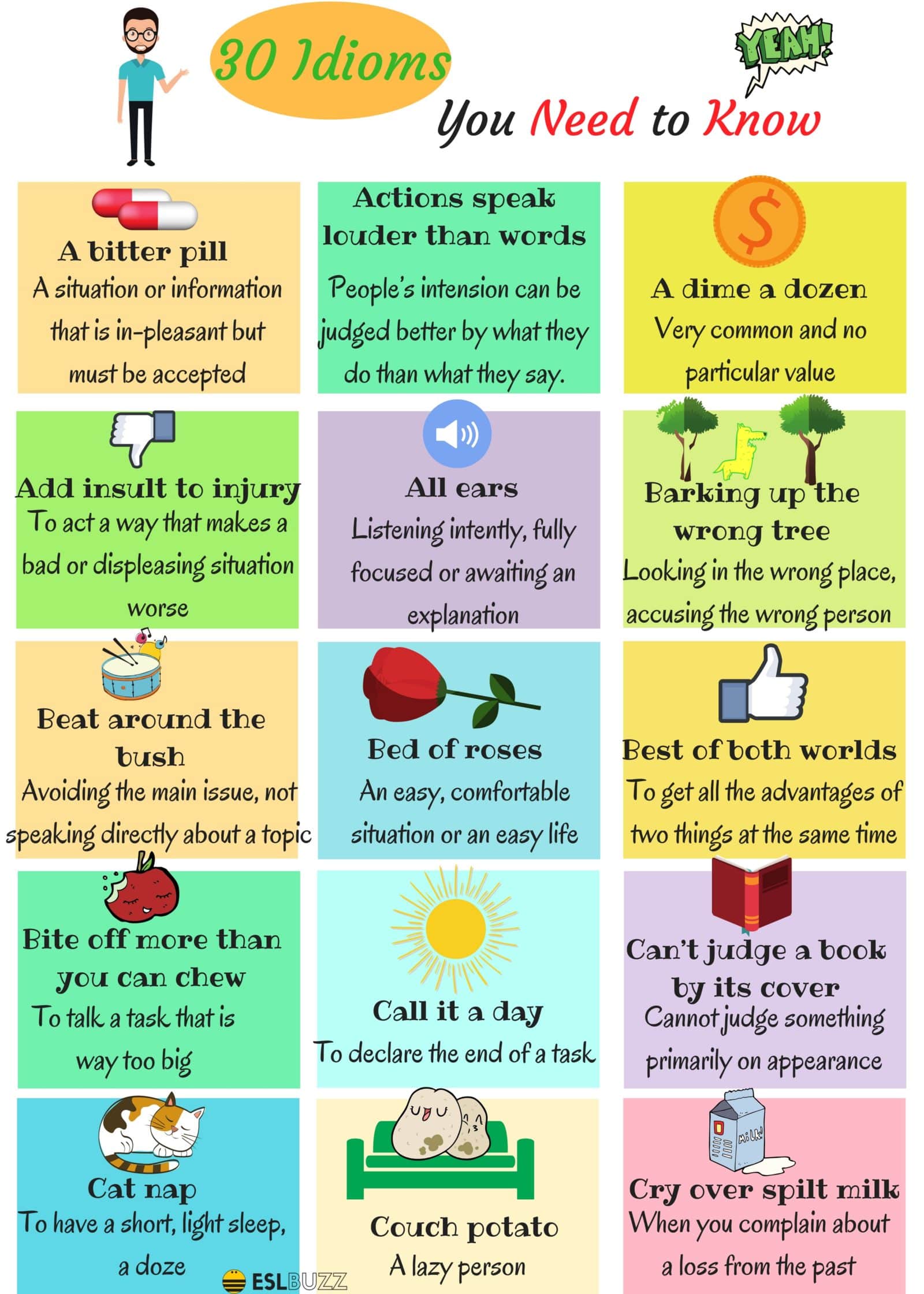
Idioms - ESLBUZZ
Idiom 1500 English Idioms From Az With Examples Vacation Cheat Sheet:
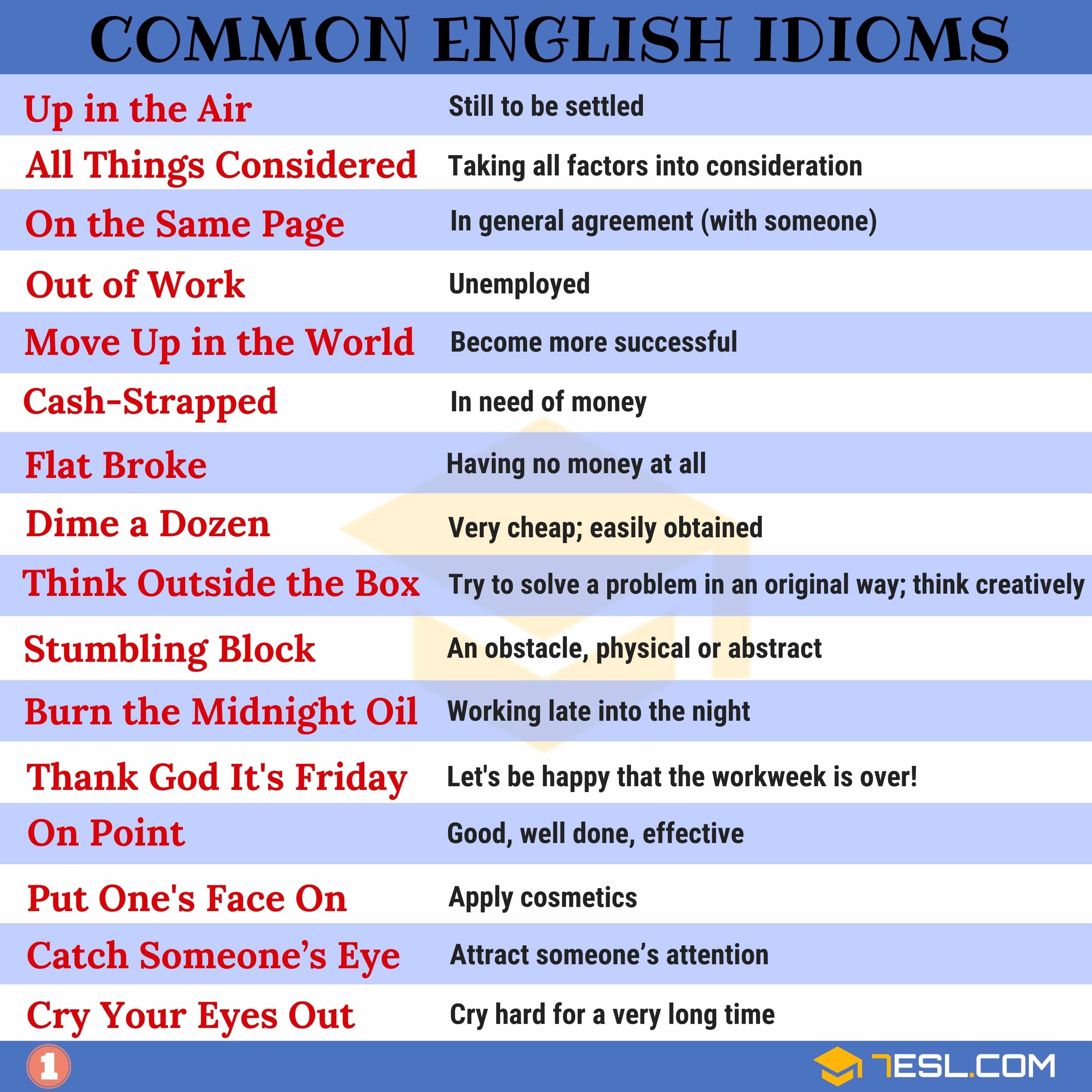
Idiom 1500 English Idioms From Az With Examples Vacation Cheat Sheet:
56 Rare Idioms In English With Meanings And Examples • 7ESL

56 Rare Idioms in English with Meanings and Examples • 7ESL